

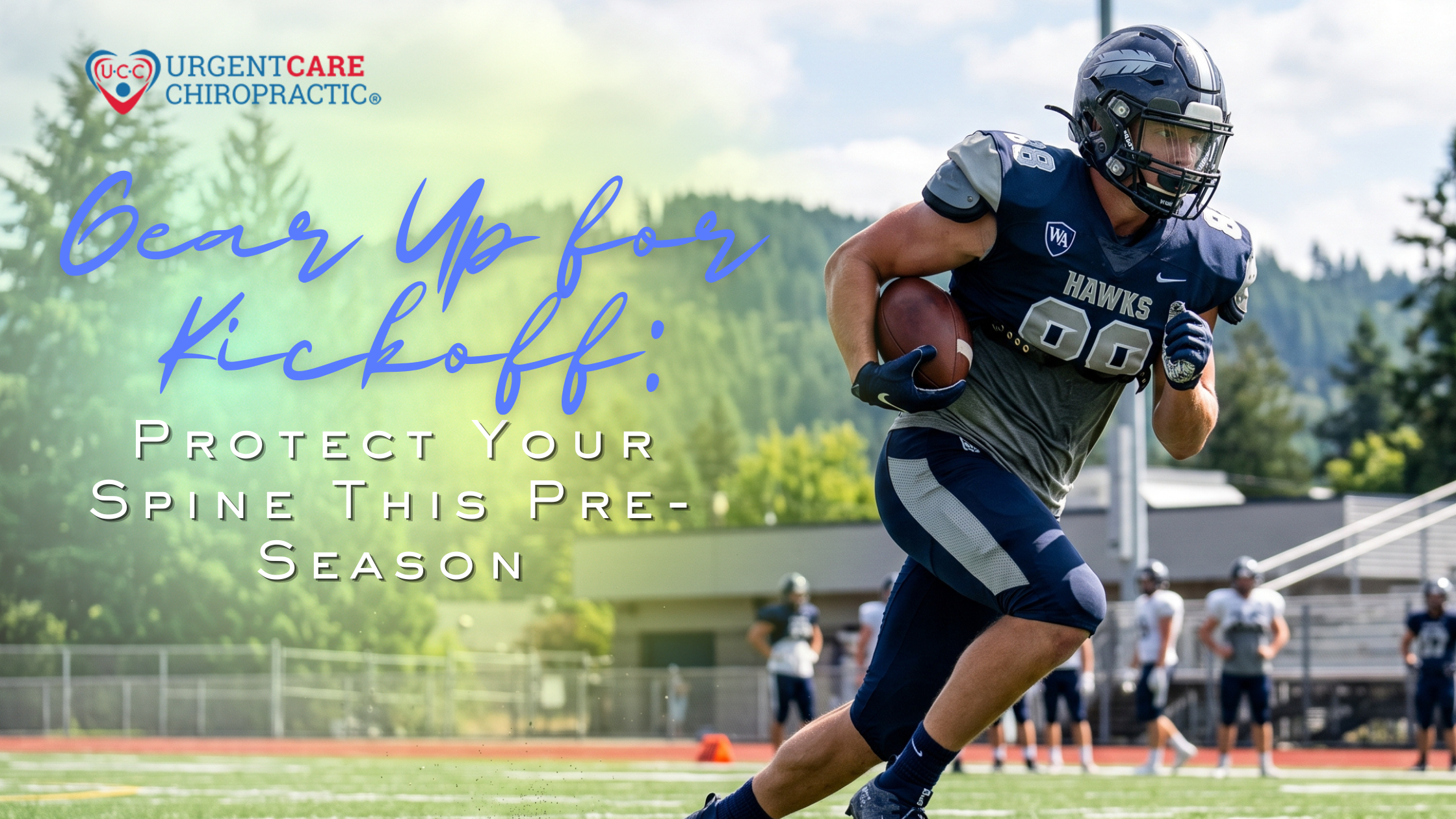
As August rolls in, local field sports are kicking into high gear. High school football programs across Washington are deep into summer two-a-days, adult recreational leagues are gearing up for fall, and athletes of all ages are pushing their bodies to the limit.
While pre-season conditioning builds endurance, the high-impact nature of football-characterized by heavy tackles, sudden directional cuts, and repetitive turf contact-places immense stress on the musculoskeletal system. Understanding how collision sports affect your spine and joints is the key to staying off the bench this fall.
The Physical Cost of Pre-Season Training
High-impact sports subject the body to rapid rotational force and sudden axial loading (downward pressure on the spine). When an athlete takes a hit or plants their foot awkwardly during a drill, the force doesn’t just disappear-it gets absorbed by the joints, ligaments, and surrounding soft tissues.
Without proper spinal alignment, this force isn’t distributed evenly. Common issues that emerge during August training include:
- Micro-Trauma to the Cervical Spine: Repeated minor impacts can cause neck stiffness, joint restrictions, and early-stage whiplash, even without a major crash or concussion.
- Sacroiliac (SI) Joint Dysfunction: Sprinting on hard turf and making sharp cuts can misalign the pelvis, causing sharp lower back pain that radiates into the glutes.
- Compensatory Muscle Strain: When a joint in the spine or hip becomes restricted, surrounding muscles overwork to compensate, leading to stubborn hamstring or groin pulls.
How Chiropractic Adjustments Enhance Performance and Recovery
Chiropractic care isn’t just for treating injuries after they happen-it’s a proactive strategy to optimize athletic performance.
- Restoring Range of Motion: Precise spinal adjustments correct joint subluxations (misalignments), ensuring athletes have the full rotation needed to throw, tackle, and run efficiently.
- Accelerating Soft Tissue Recovery: By restoring proper joint mechanics, chiropractic care reduces unnecessary strain on overworked muscles, speeding up recovery time between grueling workouts.
- Improving Proprioception: Your spine houses the central nervous system. Proper alignment enhances joint position sense (proprioception), improving balance, reaction time, and agility on the field.
Pre-Season Preparation Checklist for Athletes
If you or your student-athlete are preparing for kickoff this month, incorporate these essential habits into your daily routine:
- Prioritize Dynamic Warm-Ups: Never start high-impact drills cold. Spend 10–15 minutes on dynamic movements like leg swings, lunges, and torso twists to prepare your nervous system.
- Check Equipment Fit: Ensure helmets, shoulder pads, and cleats fit properly. Ill-fitting footwear, in particular, can alter your stride and destabilize your lower back.
- Schedule a Pre-Season Alignment: Get your spine and joints evaluated before full-contact practice begins. Correcting minor misalignments early prevents them from turning into season-ending injuries.
Don’t wait for a major hit to take care of your body. Call our clinic today to schedule a pre-season sports evaluation and keep your head in the game all autumn long!